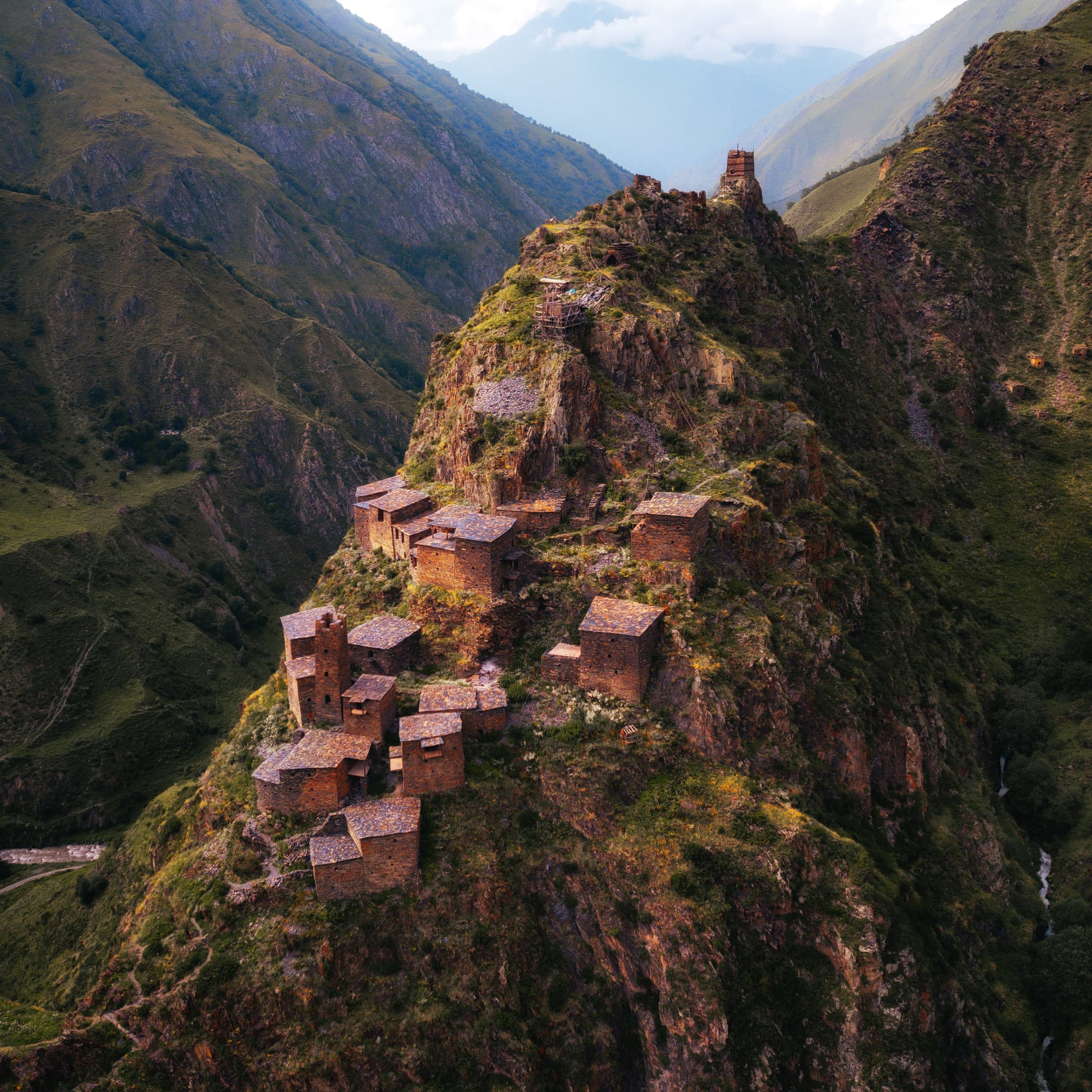
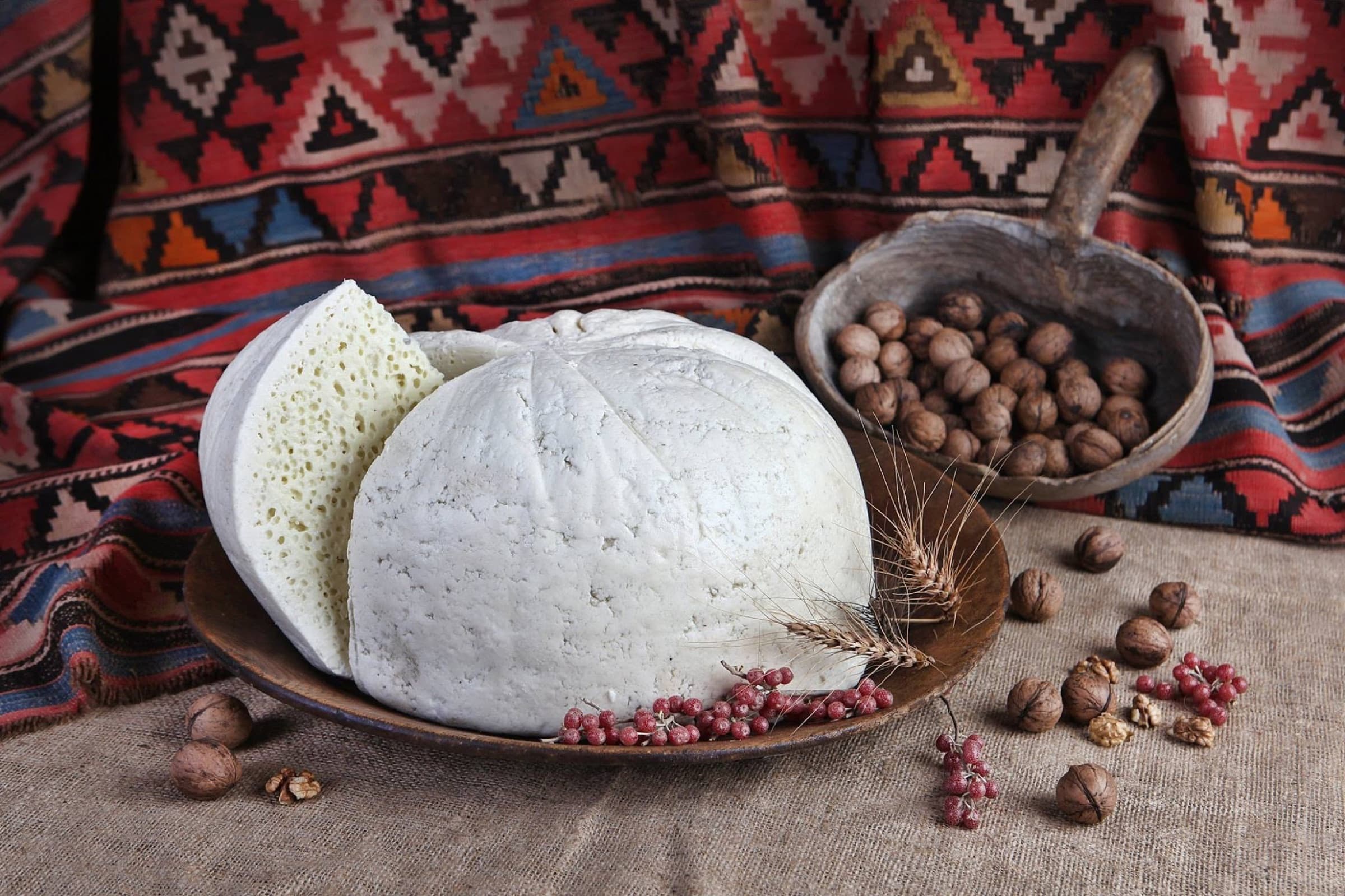
Almost every corner of Georgia has its own traditional cheese. And yet you'd be hard pressed to find a product that captures the local land and way of life quite like Tushetian guda cheese. Its taste and character come from the high-mountain environment of Tusheti, the local breed of sheep, and a shepherding tradition that goes back many centuries.
And, most importantly, from the way the cheese ripens inside the guda.
So, what is a guda?
A guda is a sack sewn from specially treated sheep, goat, or calf hide. During ripening, it's this sack that shapes the cheese's final texture and aroma. By the official standard, Tushetian guda is traditionally made from sheep's milk, though under certain conditions cow's milk or a mix is allowed too. The one real requirement is that the cheese has to ripen inside the guda itself. Usually that takes around 60 days.
That's exactly why Tushetian guda stands out with its sharp, distinctive, slightly spicy and salty taste. Its texture is fairly firm and crumbly, which sets it apart from other Georgian cheeses.
Life high in the mountains
Tusheti is one of the highest mountain regions in eastern Georgia. Its permanent settlements sit at roughly 1,900 to 2,400 meters above sea level, while the summer pastures stretch from 2,000 all the way up to 3,400 meters. In winter the region stays under snow for six months, and the summer is short and cool. In conditions like these you find a rich cover of subalpine and alpine plants, which is the main food for Tushetian sheep — and all of that leaves its mark on the aromatic qualities of the milk.
Moving with the flock
For centuries, the Tush people spent their summers in the mountains, grazing their flocks on the alpine pastures and working the milk right there on the spot. According to historical sources, in the 16th–17th centuries the Tush were granted the winter pastures of Shiraki and Alvani, which set the pattern for a seasonal migration — up to the mountains in spring, and back down to the lowlands in autumn. This practice, known as transhumance, is considered one of the longest-surviving seasonal herding traditions in Europe.
Carrying the milk down the mountain every day was impossible, so people needed a way to keep the product for the long term. And that's how the technology of ripening cheese in a guda came about.
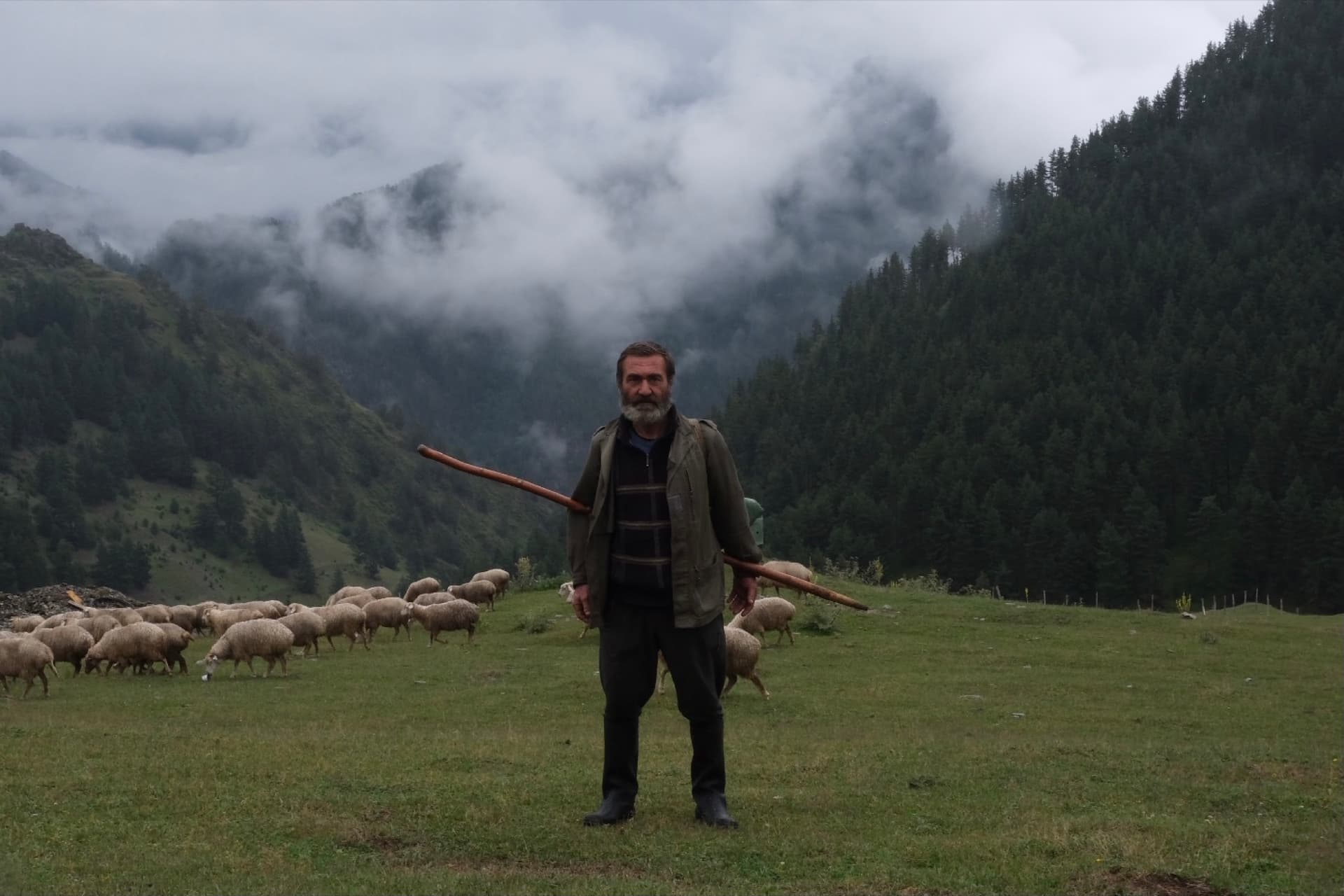
A Tush shepherd with his flock on the summer pastures of Tusheti — for centuries, this seasonal life in the mountains has shaped the taste of guda cheese.
A name worth protecting
It's precisely because of this uniqueness that “Tushuri Guda” is a Protected Designation of Origin (PDO) in Georgia, and the tradition of making it is recognized as part of Georgia's intangible cultural heritage.
A tradition under pressure
The basic principles of making guda cheese stayed almost unchanged for centuries. In the last few decades, though, this tradition has run into new challenges. Since the 1990s the scale of sheep farming in Georgia has shrunk considerably, and that hit Tushetian guda too. Specialists also point out that some producers are swapping the traditional hide guda for modern materials, which changes both the ripening process and the final character of the cheese. That's why, in recent years, real attention has gone into preserving the authentic method and holding to the protected-origin standards.
Tasting it for yourself
Today, when you travel through Tusheti, you can still get to know this tradition firsthand. In summer, when the shepherds drive their flocks up to the alpine pastures, many family farms are still making guda cheese the traditional way. At some of them, guests can not only taste the product but watch the whole process — from getting the milk to the cheese ripening in the guda.
Trying the cheese alongside local bread, fresh herbs, or other mountain products shows far better why it became one of the region's main symbols.
Tushetian guda is more than just a local delicacy. It's one of those rare products whose flavor is tied directly to a specific place, its natural conditions, and the way people live there. That's why tasting it while traveling in Tusheti is just as important a part of getting to know the region as seeing the towers, the hiking trails, or the high-mountain villages.
Get to know the taste of Tushetian guda cheese, the way it's made, and the unique, distinctive traditions of Georgia's other regions too — while traveling with darani.travel.